Beyond Surface Cleaning - What's Really Lurking in Your Home's Air?
 A home can look spotless and still hold more than meets the eye. The kitchen counters may shine, the floors may be freshly cleaned, and the laundry may be neatly folded. Very satisfying, of course. But while surface cleaning makes a space feel instantly fresher, it does not always deal with what is moving through the air or settling deep into fabrics.
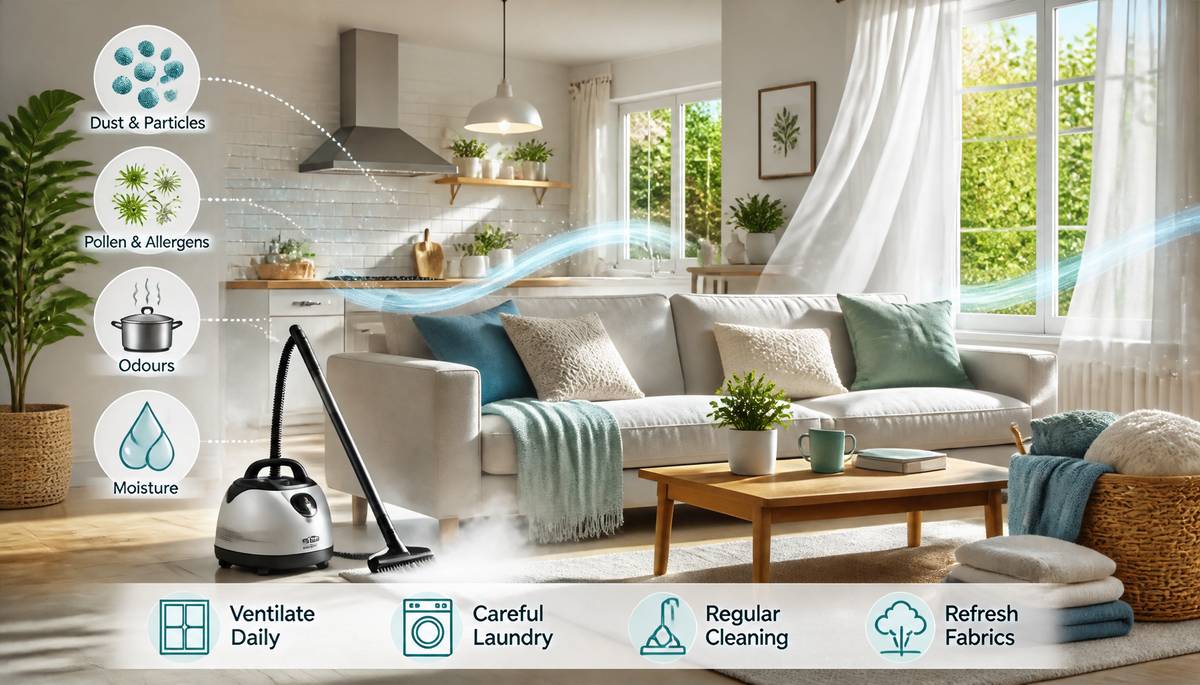
Indoor air can carry dust, allergens, odours, moisture, and tiny particles that are easy to overlook. These can collect in curtains, sofas, bedding, rugs, and clothing before being released again through everyday movement. So, when thinking about a truly clean home, it helps to look beyond what can be wiped down.
Indoor Air Is Busier Than You Think
The air inside a home is constantly changing. Cooking, heating, cleaning products, pets, outdoor pollution, pollen, and even freshly washed laundry can all affect what circulates from room to room. Some particles settle quickly, while others remain suspended in the air or become trapped in textiles.
Dust is a good example. It may look like a harmless grey layer on a shelf, but household dust can contain fibres, skin cells, pollen, and particles brought in from outside. Add moisture into the mix, especially in bathrooms, kitchens, or poorly ventilated rooms, and the indoor environment can become less fresh than it appears.
That does not mean every home is unhealthy. It simply means that visible cleanliness is only part of the picture.
Why Fabrics Can Hold Hidden Particles
Soft furnishings bring warmth and comfort to a home, but they also act like quiet collectors. Sofas, cushions, mattresses, curtains, throws, and rugs can absorb odours and trap fine particles over time. Unlike a hard surface, they cannot always be cleaned with a quick wipe.
This is why textile care matters. Washing suitable fabrics, airing rooms, refreshing upholstery, and caring for clothing properly can all help reduce what lingers indoors. Steam-based hygiene is often valued because it can work through fabrics and surfaces in a way that ordinary surface cleaning cannot.
For example, Steam Purification & Sterilization refers to the use of steam to help purify textiles, objects, and surfaces. Laurastar’s microfine dry steam technology is linked to this kind of deeper care, supporting hygiene while also respecting the need to maintain clothes and home fabrics over time.
The Problem With “Clean-Looking” Spaces
A room can look tidy while still holding stale air, trapped odours, or particles in soft materials. A sofa may appear spotless but carry cooking smells. Curtains may look fresh while holding pollen from open windows. Bedding may feel comfortable but still gather dust between washes.
This is not a sign of poor housekeeping. It is simply normal home life. The key is to understand that different parts of the home need different kinds of care. Floors, shelves, fabrics, and air all play their own role in how clean and comfortable a space feels.
Simple Habits That Support Fresher Indoor Air
Ventilation is one of the simplest ways to improve the feel of a room. Opening windows when possible, using extractor fans, and reducing excess humidity can help prevent air from becoming stale. Regular vacuuming, careful laundry habits, and refreshing textiles can also make a noticeable difference.
A healthier home is rarely created by one dramatic cleaning session. It usually comes from small, consistent habits that work together. Surface cleaning still matters, of course, but it should sit alongside fabric care, ventilation, and attention to the invisible particles that move through everyday spaces.
Conclusion
True home hygiene goes deeper than polished surfaces. The air, the fabrics, and the objects used every day all contribute to how fresh and healthy a home feels. By looking beyond surface cleaning, it becomes easier to create a living space that feels comfortable, cared for, and genuinely refreshed.
After all, a clean home should not only look good. It should feel good to breathe in, relax in, and live in.
|
|